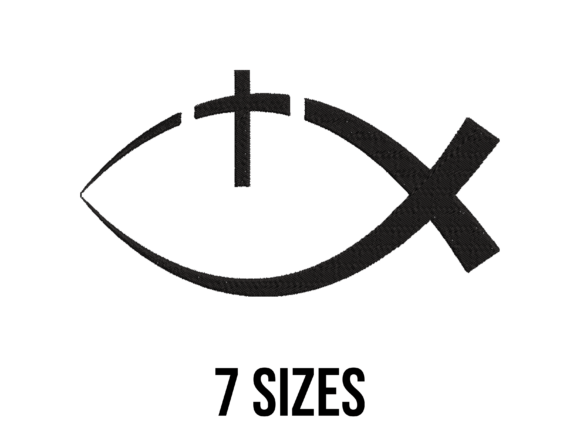
Christian Fish Embroidery Design
A Quiet Symbol That Stitches Well—Not Just Spiritually
As someone who’s stitched hundreds of faith-based designs for churches, boutique shops, and Etsy sellers, I opened the Christian Fish Embroidery Design expecting simplicity—and got something more: a quiet confidence in its lines. It’s not flashy. No ornate borders, no scripty banners, no extra flourishes. Just the Ichthys—clean, centered, with a subtle cross embedded in the body. That restraint is its strength. I tested it on a natural linen tote bag destined for a church welcome team, and right away, the design held its shape without pulling or bleeding into the weave. It felt intentional—not like a clipart afterthought, but like a design that understands embroidery as a craft, not just decoration.
Where This Design Earns Its Keep
The Christian Fish Embroidery Design shines where subtlety and sincerity matter most: custom apparel for volunteers, embroidered patches for youth group jackets, pillow covers for nursery decor, and tea towels for Christian home goods shops. It reads clearly at 3.5 inches wide—large enough to read from across a room, small enough to fit neatly on a baby onesie chest or the brim of a dad cap. I used it on a lightweight cotton sweatshirt (mid-weight fleece), and the satin stitch outline held crisp definition without stiffness. On a woven apron for a local bakery’s “Faith & Flour” line? Perfect. The fish sat cleanly over the pocket without overwhelming the fabric’s texture.
For Etsy sellers and small shop owners, this design works beautifully in printable mockups—it scales well across light and dark backgrounds, and the cross detail remains legible even in grayscale previews. As a digital embroidery file, it’s versatile enough for both personal keepsakes and commercial embroidery projects, provided licensing allows resale of finished items (always verify that before listing).
Fabrics and Fit: Know When to Lean In—or Step Back
This isn’t a one-size-fits-all machine embroidery design. On stretchy knits like jersey tees? Proceed with caution. Without proper cutaway stabilizer and careful hooping, the curve of the fish’s tail can distort. I saw slight puckering on a lightweight black T-shirt until I switched to a medium-weight tear-away + light cutaway combo. Similarly, avoid using it on ultra-thin fabrics (think voile or sheer rayon) without backing—the fill stitch density, while moderate, still needs support to prevent shadowing or thread pull-through.
Curved surfaces—like structured caps or curved pillow seams—require repositioning the design so the fish’s eye and cross stay upright. A quick test stitch on scrap fabric curved over a bottle helped me adjust placement before committing. And while it’s not an applique design, don’t be tempted to add fabric layers beneath it unless you’re experienced with layered stitch sequencing—the clean lines rely on smooth, uninterrupted stitching.
What It Adds (and Doesn’t Add) to Your Finished Product
This Christian Fish Embroidery Design elevates handmade presentation without shouting. Customers notice it—not because it’s loud, but because it feels considered. On a holiday gift set (tote + tea towel + baby blanket), it unified the collection with quiet cohesion. No need for matching fonts or secondary icons; the fish alone carried the theme. That kind of visual trust matters—especially for faith-based buyers who value authenticity over ornamentation.
It also supports brand consistency. A small church boutique used it across their entire seasonal line—same size, same thread palette (navy, cream, charcoal)—and customers began recognizing it as their signature. That’s rare for a single symbol. But it doesn’t work for everything: skip it on busy patterned fabrics (florals, geometrics), and avoid pairing it with overly decorative fonts or dense background fills. Let the fish breathe.
Practical Designer Notes You’ll Actually Use
- Always test first—not just on plain white cotton, but on your actual project fabric, with your chosen stabilizer and thread colors.
- Check the stitch density visually in your embroidery software: look for tight clusters around the cross detail. If they’re too dense for your fabric weight, consider reducing density by 5–8%.
- Confirm hoop size compatibility. At standard sizing, it fits comfortably in a 4x4 hoop—but if you plan to resize beyond 120%, check for stitch integrity in the fin tips and cross arms.
- Inspect small details in black-and-white mockups. Does the cross read clearly against dark fabric? Does the fish silhouette hold up on textured weaves like burlap or terry cloth?
- Use high-quality thread colors—this design’s elegance depends on clean color transitions. Faded or low-sheen threads mute the reverence in its form.
- Verify licensing terms before selling finished products or bundling it into design assets for digital shops. Not all embroidery files permit commercial use out of the box.
Final Thought: It’s Not Just a Fish—It’s a Threshold
In my decade reviewing embroidery assets for creative entrepreneurs, few symbols land with this balance of clarity, calm, and craftsmanship. The Christian Fish Embroidery Design doesn’t try to be everything—it knows its role. It’s a threshold symbol: simple enough for a child’s baptismal onesie, dignified enough for a pastor’s stole, adaptable enough for a craft fair tote or a wedding gift for a newly married couple starting their faith journey together.
If you’re choosing it for a custom apparel line, a handmade product collection, or a personalized gift, treat it like a quiet collaborator—not a decoration to layer on top, but a partner in meaning. Stitch it with intention, stabilize thoughtfully, and let the Ichthys do what it’s meant to: point gently, hold space, and endure.