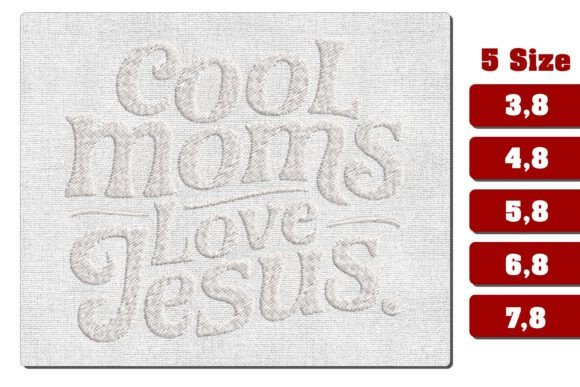
Cool Moms Love Jesus Embroidery Design
First Impression: Bold, Warm, and Instantly Relatable
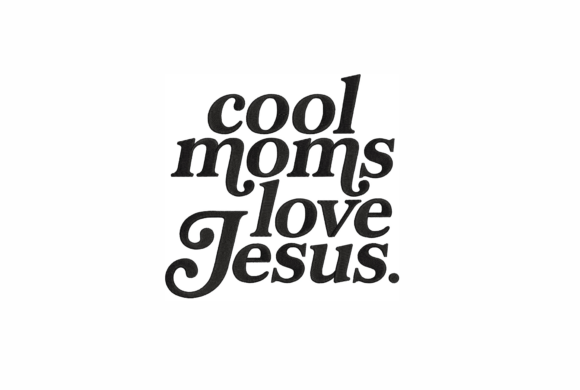
As an embroidery designer who’s prepped over 200 craft fair booths, my gut reaction to Cool Moms Love Jesus Embroidery Design is immediate: it’s bold without being loud, warm without leaning into cliché, and effortlessly conversational. It lands somewhere between modern farmhouse and joyful minimalism—clean lines, confident lettering, and a message that resonates deeply with faith-centered moms who value authenticity over perfection. At a glance, it reads as both heartfelt and hip—a rare balance that makes it stand out in a sea of generic “Mom” or “Blessed” designs.
Where It Shines on Craft Fair Products
This machine embroidery design thrives where personality meets practicality. On a sturdy canvas tote bag (5.8–7.8 in size), it becomes a conversation starter—visible from three feet away, legible without squinting, and stylish enough to pair with denim or linen. As an apron embroidery, the 4.8–6.8 in versions anchor beautifully above the pocket, giving handmade kitchen gear instant charm and intentionality. For tea towel embroidery, I recommend the 3.8–4.8 in size: centered on the top third, it adds just enough detail without overwhelming the fabric’s texture or competing with hand-printed flourishes.
Embroidered patch applications are especially smart—stitch the 3.8 in version onto denim jackets, backpacks, or market bags for a subtle yet meaningful accent. On small pouches or pillow covers, the 3.8–4.8 in sizes maintain clarity while supporting batch production. And yes—it works on caps, but only with careful stabilization and a mid-size (4.8 in) version to avoid distortion across the curved surface.
Real-World Selling Strengths
At a craft fair, Cool Moms Love Jesus Embroidery Design draws attention because it’s emotionally specific—not vague, not generic. Shoppers pause. They smile. They say, “That’s *so* me.” That micro-moment of recognition is gold. It performs exceptionally well as a small shop product because it doesn’t require explanation—it communicates its values instantly. For Etsy sellers, it photographs cleanly on light and medium-tone fabrics, translates beautifully into printable mockups, and supports cohesive branding across listings (think matching tea towels + aprons + patches under one collection title).
It also scales efficiently: whether you’re stitching ten or one hundred units, the design holds up. Its clean letterforms and balanced negative space mean low risk of thread nesting or skipped stitches—even at higher speeds. That consistency directly boosts perceived handmade quality and booth credibility.
Practical Production Notes Every Designer Should Check
- Test before you commit: Run the embroidery file on scrap fabric matching your final product—especially textured towels or thick denim. What looks crisp in software can blur on terry cloth.
- Thread contrast matters: This design relies on readability. Avoid pale thread on light fabric or dark thread on black—opt instead for navy on oatmeal, burgundy on cream, or charcoal on natural canvas.
- Stabilizer is non-negotiable: Use cutaway or tear-away depending on fabric weight. Skip it on knits or loosely woven tea towels, and you’ll get puckering—not polish.
- Hoop size & spacing: Confirm your machine’s maximum hoop capacity aligns with your chosen size—especially if planning large-format tote bag runs. Also verify letter spacing stays open at smaller sizes; tight kerning at 3.8 in can cause legibility loss.
- Stitch density watchpoint: While not described as ultra-dense, always inspect the file for overlapping fills or condensed script areas—these heat up needles and increase breakage on long batches.
Careful-Use Scenarios to Flag Early
This digital embroidery file shines brightest when matched thoughtfully to material and scale. Avoid using the 3.8 in version on dark fabric—it simply won’t pop. Skip it entirely on heavily textured surfaces like waffle-weave towels unless you’ve tested stabilizer layers thoroughly. And never assume the smallest size will read clearly on curved cap fronts—the distortion flattens fine details fast. If your target is commercial embroidery or wholesale, confirm commercial licensing applies before selling finished products. The description notes multiple sizes—but says nothing about usage rights, so verify before scaling beyond personal use.
How It Elevates Your Booth & Brand
In person, Cool Moms Love Jesus Embroidery Design strengthens visual cohesion across your display. Pair it with neutral-toned linens, minimalist packaging, and soft signage—and suddenly your table feels intentional, curated, and spiritually grounded without being preachy. It invites engagement: moms point it out, daughters snap photos, pastors’ wives ask about sourcing. That kind of organic connection fuels repeat sales and word-of-mouth buzz far more than flashy graphics ever could.
For boutique makers building a signature line, this design reinforces brand consistency—especially when used across complementary craft fair product categories. A matching set (tote + tea towel + embroidered patch) tells a story customers want to take home. And because it leans into genuine identity rather than trend-chasing, it avoids looking dated by July.
Final Verdict for Creative Entrepreneurs
If you sell handmade goods rooted in faith, family, and everyday joy, Cool Moms Love Jesus Embroidery Design is a high-return, low-risk addition to your design assets. It’s versatile enough for Mother S Day gifting, year-round kitchen wear, and even back-to-school spirit gear. It photographs well, stitches reliably, and connects authentically—with zero irony required. Just remember: invest time in real-world testing, choose sizes deliberately per product type, and always prioritize thread/fabric contrast. When executed with care, this embroidery design doesn’t just decorate fabric—it deepens meaning, builds community, and quietly sells itself.