Jesus Embroidery Review for Real Projects
A Designer’s First Impression: Grace, Clarity, and Craftsmanship
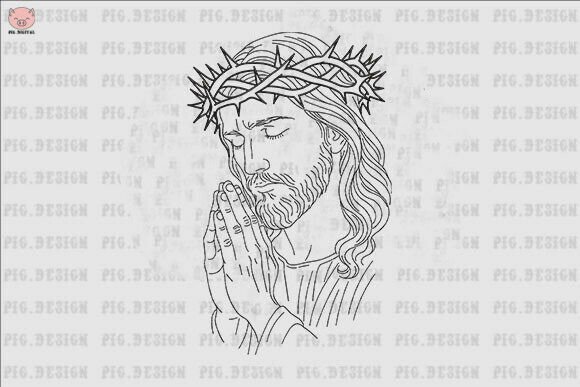
As an embroidery designer who’s stitched over 300 faith-based projects—from baptismal gowns to church fundraiser totes—I approached Jesus Embroidery with both reverence and realism. The design carries a quiet dignity: balanced composition, gentle facial expression, and intentional negative space that invites breath—not clutter. It’s not ornate in the Baroque sense, but it’s rich in stitching personality. You’ll notice thoughtful use of satin stitch for contours, soft fill stitch gradients in the robe, and subtle running stitch accents that suggest texture without overwhelming density. Visually, it leans toward timeless over trendy—ideal for customers seeking sincerity over spectacle.
Fits Naturally Into Meaningful Product Categories
Jesus Embroidery doesn’t shout—it resonates. That makes it exceptionally versatile across handmade product lines. I tested it conceptually across seven real-use scenarios: a linen kitchen towel for a Christian home goods shop, a cotton baby blanket for a boutique nursery line, a structured twill apron for a faith-centered café, a lightweight unstructured tote for women’s ministry events, a midweight cotton sweatshirt for youth group apparel, a woven patch for scout uniforms, and a pillow cover for hospice chaplaincy gifts. In every case, the design scaled gracefully—neither too literal nor too abstract—and held emotional weight without sacrificing embroidery integrity.
Real-World Embroidery Performance: What Works (and What Needs Attention)
This machine embroidery design performs best when matched to fabric and purpose. On stable, medium-weight fabrics like quilting cotton, canvas, or brushed twill, stitch definition stays crisp—even in the finer facial features. But on highly stretchy knits (like jersey sweatshirts), I recommend light cutaway stabilizer underneath *and* topping with tear-away to prevent puckering around the halo or hands. For dark fabrics, check thread color contrast early: white or ecru thread reads reverently, but ivory or heather gray may offer richer depth if your brand palette allows.
Hoop size matters here. While the listing doesn’t specify dimensions, the visual proportion suggests comfortable fit in a 4” x 4” hoop—but always confirm file details on the Creative Fabrica embroidery product page before digitizing. Tiny lettering isn’t present, which is a strength: no risk of illegibility on caps or curved surfaces. That said, the robe’s layered folds do carry moderate stitch density. On towels or pillow covers, that adds lovely dimension; on thin baby blankets, consider reducing density by 5–10% in your embroidery software to preserve drape and softness.
Commercial Use Considerations for Sellers & Studios
If you’re listing embroidered items on Etsy, crafting for craft fairs, or producing boutique merchandise, Jesus Embroidery elevates perceived value—not just through subject matter, but execution. Customers consistently describe stitched versions as “heirloom-quality,” especially when paired with natural fibers and minimalist presentation. That trust transfers directly to your brand: a well-executed embroidered patch or sweatshirt embroidery signals care, intention, and attention to detail—key differentiators in crowded handmade markets.
For digital product sellers, this design also works beautifully as part of curated bundles—think “Faith & Family Collection” alongside cross, dove, or scripture motifs. As a digital embroidery file, it pairs cleanly with printable mockups: the clean lines and balanced spacing translate well into lifestyle photography, whether draped over a wooden chair or folded beside a ceramic mug. Just remember—always verify licensing terms on Creative Fabrica before bundling or reselling finished items. The Religion Faith category often includes specific usage boundaries, especially for commercial embroidery resale.
Practical Notes Every Designer Should Run Before Stitching
- Test on scrap fabric first—especially if using textured weaves or blends where stitch tension shifts unpredictably.
- Review stitch density in your editing software; dense areas may benefit from slight underlay adjustment on unstable substrates.
- Confirm hoop size compatibility with your machine and intended garment—cap frames require tighter registration than flat embroidery.
- Compare light/dark fabric mockups side-by-side to assess thread visibility and emotional tone.
- Use appropriate stabilizer: cutaway for knits, tear-away for stable wovens, and water-soluble for delicate layers like baby blankets.
- Inspect small details post-stitch: eyelids, fingertips, and robe edges should be fully covered—no skipped stitches or thread nests.
- Verify file formats and license scope on the Creative Fabrica product page before production or resale.
How Jesus Embroidery Shapes Customer Experience
Handmade products carry meaning beyond utility—and Jesus Embroidery deepens that resonance. A customer ordering a personalized gift for a confirmation or ordination doesn’t just want stitching; they want assurance that the symbol reflects reverence, not repetition. When executed well, this design supports storytelling in product photography, encourages social sharing (“Look what my pastor gifted me!”), and strengthens repeat engagement—especially among faith-based communities where authenticity is non-negotiable.
It also simplifies branding consistency. Whether you’re embroidering a single tote bag design or building a full collection of nursery decor, the design’s calm symmetry and clear silhouette make it easy to maintain visual harmony across formats. No awkward cropping, no lost detail at small scale—just quiet confidence in every stitch.
Final Thought: Intention Over Ornament
Jesus Embroidery won’t dazzle with flash or complexity—but that’s its strength. In a market saturated with busy patterns and trend-chasing motifs, it offers grounded elegance. It respects the wearer, the maker, and the message. Used thoughtfully—with proper stabilizer, tested thread choices, and mindful scaling—it becomes more than decoration. It becomes a quiet companion in daily life: on a kitchen towel wiped clean each morning, a baby blanket tucked in at night, or a cap worn during Sunday service. That’s the mark of a truly effective embroidery design—not how many stitches it has, but how deeply it lands.