He Is Risen: A Designer’s Real-World Embroidery Review
Let’s be honest—Easter embroidery designs flood the market every March, but few land with both reverence and practicality. I recently tested He is Risen on a custom linen tea towel for a local boutique’s spring collection, and it changed how I think about Bible verse embroidery in commercial work. This isn’t just another scripty cross or generic “Happy Easter” motif. It carries weight—visually and spiritually—and that matters when you’re stitching something meant to be held, gifted, or displayed.
First Impressions: Clean, Calm, and Confidently Composed
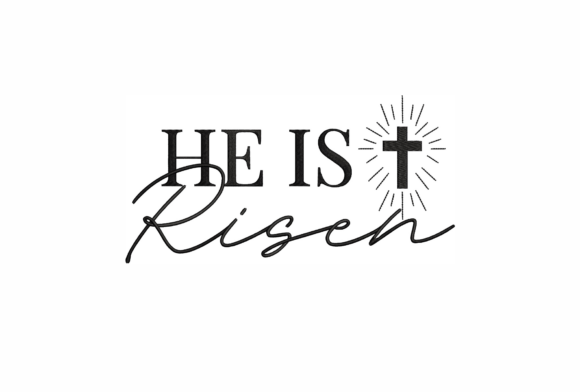
Opening the He is Risen embroidery file, I noticed its balance right away: centered layout, moderate height-to-width ratio, and thoughtful spacing between words. No cramped letters. No awkward kerning. The font reads like a gentle serif—neither overly ornate nor starkly modern—which makes it feel timeless rather than trend-bound. It’s not an applique design; it’s a fully digitized machine embroidery design built around satin stitch outlines and smooth fill stitch interiors. That means crisp edges on stable fabrics, but also demands attention to stabilizer choice on anything delicate.
I stitched it first on a medium-weight cotton twill tote bag—my go-to test for client-facing products. At 4.5 inches wide, the medium size filled the front panel without overwhelming it. The letterforms stayed legible, the curves held shape, and the overall mood was serene, not shouty. That’s rare. Many Easter embroidery designs lean into celebration with bold fonts or busy flourishes—but He is Risen trusts the message to speak for itself. That quiet confidence translates directly into perceived value for handmade products.
Where It Shines (and Where It Asks for Extra Care)
He is Risen works beautifully on structured, low-stretch items: pillow covers, kitchen towels, baby blankets, and even lightweight denim aprons. On a soft cotton onesie, I used tear-away + light cutaway stabilizer and got clean, soft results—even at the smallest size (just under 2 inches). The stitch density feels intentional: dense enough to read clearly at arm’s length, but not so heavy that it stiffens thin fabric or cracks after washing.
That said—curved surfaces demand caution. I tried it on a structured cap front (medium size), and while the lettering remained legible, the outer curves of the “R” and “n” softened slightly due to fabric distortion. Not a dealbreaker, but worth testing with your specific cap style and hoop setup. Likewise, dark fabrics require careful thread color selection. White or ecru thread reads cleanly, but pale gold or ivory adds warmth without sacrificing contrast. Avoid pastel threads unless you’re pairing with very light fabric—they’ll vanish.
For Etsy sellers and craft fair vendors: this design elevates simple items instantly. A plain muslin drawstring bag becomes a meaningful Easter gift when stitched with He is Risen in charcoal gray thread. A cream-colored linen pillow cover? Instant nursery decor with quiet intention. Buyers respond to that authenticity—it signals care, not just craft.
What to Watch on Tricky Fabrics and Uses
- Thin or sheer fabrics: Use a lightweight cutaway stabilizer underneath and avoid reducing stitch density—fill areas need structure to prevent show-through.
- Stretchy knits (like t-shirts or baby bodysuits): Hoop with stabilizer *and* topping. The satin stitch edges can snag or pull without it.
- Textured fabrics (burlap, heavy linen, terry cloth): Stick to larger sizes (4" and up) so letterforms don’t get lost in the grain.
- Patches or layered garments: Test stitch density—if the design feels too thick, consider simplifying thread layers in your editing software (if licensed for modification).
- Frequent-wash items (baby clothes, kitchen towels): Go for high-quality polyester thread and lock stitches at start/end. The design holds up well—but only if execution matches its intention.
Design Assets That Build Trust—Not Just Traffic
As a designer who sells digital embroidery files and consults with small shops, I pay close attention to how a design affects buyer trust. He is Risen doesn’t scream “mass-produced.” Its proportions, spacing, and balanced weight suggest human digitizing—not auto-traced or rushed. That perception matters. When customers see a cleanly stitched He is Risen on your Instagram mockup or Etsy listing, they assume the same care went into packaging, description, and follow-up. It quietly reinforces professionalism.
For printable mockups and digital previews: render it in grayscale first. Does the contrast hold? Does the “R” still read as uppercase, not a wonky curve? I found it performed consistently across light and dark backgrounds—no hidden pixelation or jagged edges in the vector-derived embroidery file. That reliability saves time when prepping listings for your craft business or updating seasonal collections.
Practical Notes Every Embroiderer Should Run Through
- Test on scrap fabric *with your exact stabilizer and thread combo*—not just once, but twice if switching from light to dark fabric.
- Check small details at each size: does the crossbar on the “H” stay visible at 2”? Does the dot over the “i” survive dense fill areas?
- Compare black-and-white and color mockups—some thread palettes mute the emotional tone you want.
- Confirm hoop size compatibility before committing to a large run. Seven sizes sounds generous, but verify which ones fit your most-used hoops.
- Review licensing terms carefully—especially if you plan to sell finished embroidered patches or use it in logo-based boutique branding.
- Ask yourself: does this support the story of the product? A sweatshirt for church volunteers? Yes. A playful Easter egg pillow? Maybe not. He is Risen earns its space—it shouldn’t be decorative filler.
In the end, He is Risen isn’t just another Easter embroidery design. It’s a considered piece of visual language—one that balances reverence with wearability, clarity with calm, and tradition with thoughtful digitizing. Whether you’re stitching personalized gifts, building a holiday capsule collection, or sourcing design assets for your Etsy shop, it’s the kind of embroidery file that makes your work feel grounded, intentional, and quietly memorable.