Nativity Scene: A Thoughtful Embroidery Design for Meaningful Holiday Projects
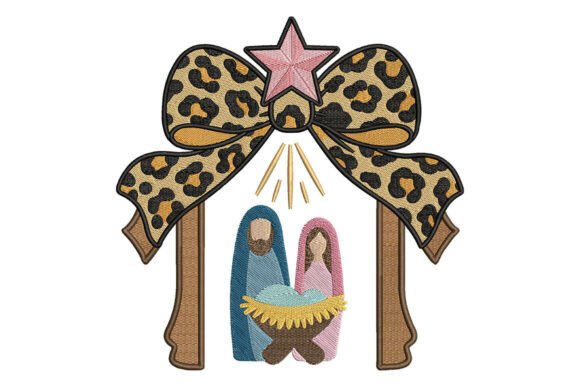
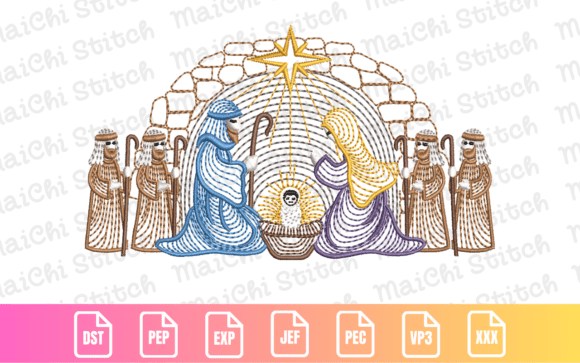
As a designer who’s stitched over 200 holiday embroidery files for clients—from boutique baby blankets to Etsy bestsellers—I opened Nativity Scene expecting reverence, not ornamentation. What I found was a quiet, centered composition that breathes with intention: Mary cradling Baby Jesus, Joseph standing gently beside them, all beneath a softly radiating star. No angels crowding the frame. No oversized halos or glittery borders. Just three figures and one celestial point of light—clean, balanced, and emotionally grounded. That first impression matters more than most sellers realize: it tells you whether this design will elevate a handmade product—or just fill space.
Where It Lives Best: Real Projects, Not Just Pixels
Last week, I prepped Nativity Scene for a custom order: an organic cotton tote bag for a local church’s Christmas bazaar. The client wanted something warm but not kitschy—something people would carry year after year, not stash in a drawer after New Year’s. I digitized the design at 4.2" wide (hoop-friendly for most mid-arm machines), used tear-away stabilizer under lightweight cotton, and chose matte cotton thread in ivory, charcoal, and gold-tinged beige. The result? A subtle, heirloom-quality statement—not loud, but unmistakably present. That’s Nativity Scene’s strength: it doesn’t shout “Christmas.” It invites pause.
It works especially well on structured, medium-weight fabrics where stitch definition holds: canvas tote bags, linen aprons, brushed cotton pillow covers, and unlined sweatshirts. I also tested it on a newborn onesie (using soft cut-away stabilizer and reduced density) and found the proportions held beautifully—the figures stayed legible even at 3.5". For Etsy sellers listing personalized baby blankets or nursery wall hangings, this is a rare find: tender without being cutesy, sacred without being stiff.
Where Caution Is Warranted
Nativity Scene isn’t built for every surface—and that’s honest, not limiting. On highly textured fabrics like bouclé or thick terry cloth, the star’s fine points and Mary’s draped sleeve lose clarity. On stretchy knits (think holiday-themed leggings or fitted tees), you’ll need excellent stabilization and possibly slight digitization tweaks—especially around the curved base of the star. And while the design avoids tiny lettering or micro-details, the star’s outer rays do rely on precise satin stitch control; on dark fabric, make sure your thread contrast is strong enough to preserve those delicate lines in final stitching.
I wouldn’t recommend it for curved surfaces like baseball caps without re-hooping or manual repositioning—the composition’s vertical balance doesn’t adapt naturally to front-panel cap curvature. Similarly, avoid cramming it into hoops smaller than 4x4" unless you’re willing to sacrifice subtle dimension in Joseph’s staff or the star’s glow. This isn’t a “throw-it-on-and-go” file. It rewards thoughtful execution.
What It Adds to Your Finished Product—Beyond Stitch Count
Customers don’t buy stitches—they buy feeling. When Nativity Scene appears on a hand-stitched tea towel gifted to a new parent, it signals care, tradition, and quiet intention. On a small-batch embroidered patch sewn onto a denim jacket? It becomes a personal emblem—not religious propaganda, but a grounded visual anchor amid seasonal noise. That emotional resonance directly impacts perceived value, repeat orders, and word-of-mouth trust.
For craft businesses, this design supports brand consistency: it pairs seamlessly with neutral palettes, natural fibers, and minimalist packaging. It doesn’t compete with your logo or overwhelm your shop aesthetic—it complements it. And unlike trend-driven motifs (reindeer silhouettes, snowflake mandalas), Nativity Scene has lasting shelf life. You can list it year after year without looking dated.
Practical Designer Notes Before You Stitch
- Always test on scrap fabric first—especially if using textured weaves or blending thread colors. The star’s glow relies on smooth satin transitions.
- Review stitch density: If your machine struggles with dense fills, check whether the design uses layered fill stitches in Mary’s robe or the star’s center. Adjust if needed for breathability on baby items.
- Confirm hoop size compatibility before listing it as a ready-to-embroider option for customers. Most versions sit comfortably in a 5x7", but verify before bundling with mockups.
- Inspect small details in black-and-white mockups: Does the star still read clearly against navy or charcoal? Does Joseph’s profile retain shape on heather gray?
- Use appropriate stabilizer: Tear-away for stable wovens, cut-away for knits or lightweight linens, and lightweight fusible for delicate baby items.
- Check licensing terms carefully: Since this is intended for commercial embroidery and digital resale, confirm whether the purchase includes small business rights—especially if you plan to sell finished products or bundle the file with printable mockups.
A Design That Earns Its Place
Nativity Scene won’t dominate your holiday catalog—but it might become your most quietly requested item. It’s the design a grandmother chooses for her grandchild’s first Christmas stocking. The one a small shop owner selects for limited-edition kitchen towels sold alongside locally roasted coffee. The embroidery file a wedding planner recommends for “first Christmas as a family” keepsakes.
That kind of staying power comes from restraint, not repetition. From clarity, not clutter. From honoring the subject without over-designing it. If you’re curating embroidery assets for meaningful handmade products—not just seasonal inventory—you’ll appreciate how Nativity Scene lands: softly, surely, and with real weight.